

Printed media often see their digital transformation as offering the same articles and the same editions in digital format. They often see a mobile app simply as a ‘digital window’ onto their existing editions. Yet, their business models are seriously under threat: they feel the heat from ‘free news’ distributed through social media. And they also feel the heat from cloud service providers, including search engines, social networks and video sharing platforms, who appeal much more to digital advertisers.
This post describes how a printed media player can transform itself to evolve from edition-centric to reader-centric, using a so-called community building competence.
What’s the problem?
The publishing industry is focused on digital subscriptions and on personalised advertising based on user registration. Is that going to work in the future? The situation today is that unless you are one of the very biggest players in the market, the #1 and maybe the #2 player, reach alone will not allow you to sustainably finance quality journalism.
Is a paywall the only alternative? Not necessarily. In working with publishers, broadcasters and advertisers, we have seen approaches where events, tickets, paid-for newsletters, briefings, in-depth analysis, consulting, merchandising and intelligence units can pay part of the bills. Such approaches reinforce the brand and fuel the different communities served by the brand.
New ways for making money as publisher
We’ll illustrate community building as a key differentiator using a story about BestMags, a fictitious publisher. The story goes as follows…
“My friend Emily and I are into wedding dresses: both of us are going to marry in a few months. Emily had already shared a short article (called a ‘snippet’) with me from publisher BestMags through our social network. I knew BestMags from WomansMag, my mom’s favourite magazine. Emily told me she used the BestMags app to read articles because it allowed her to create ‘reading lists’ like playlists on Spotify.
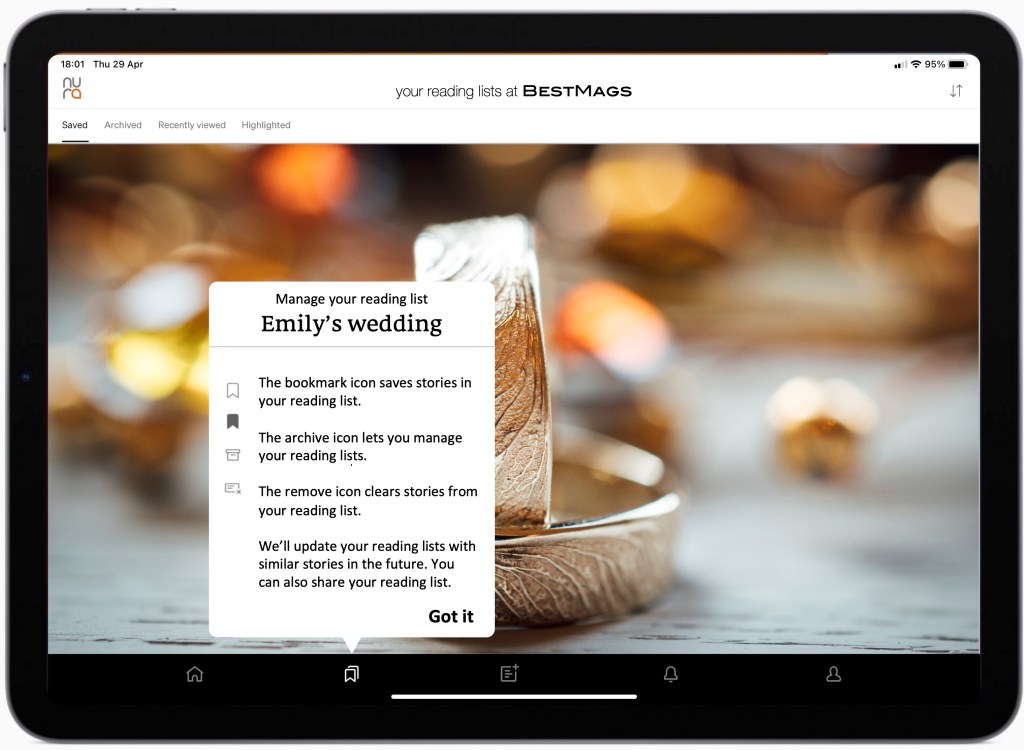
She had created such a reading list on wedding dresses, wedding decoration themes and wedding ceremonies and defined it simply by ‘clapping’ for associated articles. It included articles of WomansMag but also from LifestyleMag and TrendhopperMag. I was curious and she invited me to her reading list.
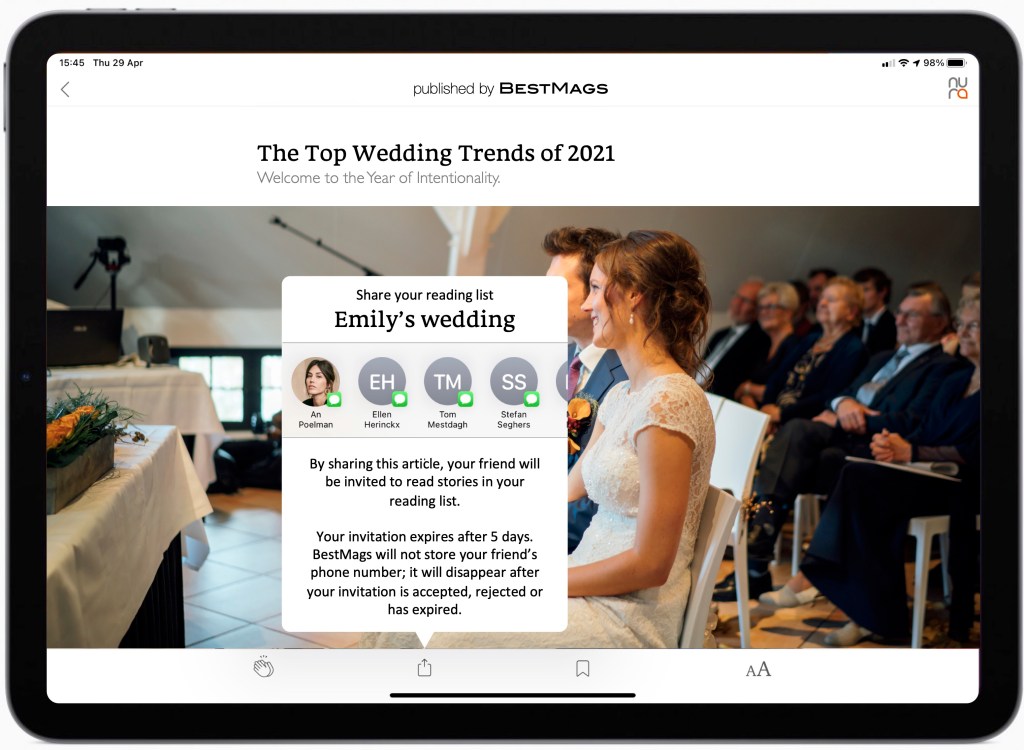
BestMags promised they would not store my phone number and that it would disappear as soon as Emily’s invitation was accepted, rejected or expired.

As non-subscriber, I was allowed to read all articles from her reading list for free during one month. And every week, a new edition came out with articles of the week. I only needed to install BestMag’s app and confirm my interest in Emily’s reading list using face-id. I didn’t need any painful registration and I could read them right away on my smartphone and tablet. No keyboard typing, nothing. Really cool.
I learned that the articles in Emily’s wedding reading list gave me insights in current wedding trends and styles. After one month, the app offered me to take a low-budget subscription to her reading list, renewable on a monthly basis. Again, no registration was needed other than what I’m used to with one-click e-commerce. Amazing.
Since Emily wanted to marry in an Amish style, I got Amish-related ads. The app offered me a subscription upgrade so I could build my own reading list. It turned out that I could build on Emily’s wedding reading list, remove the articles that didn’t interest me and add articles that I did like and covered a more traditional wedding ceremony in church. The system quickly understood that I preferred different ads than Emily. And this without any cookies. Nifty.
When I invited my fiancé Oliver and my mom to my wedding reading list, they could read the same articles and received the same ads. This also implied that BestMags could converse directly with my fiancé and my mom. What we noticed, though, was that Oliver would receive a new version of my edition somewhat later than me. Apparently, this was because he did not have a paid subscription on his own. My mom did not have a delay thanks to her WomansMag subscription.

Emily shared a BestMags article talking about ‘BestMag‘s 2022 Wedding trends’ event they organised. The event would bring some prominent journalists on stage and would also feature some wedding planners and a number of brands selling wedding stuff. I got an invitation from her to come along. I only needed to confirm my attendance with my face-id: no registration process to crawl through. And we got a discount because we came by two. Wow.
When reading a story on what people did during the lockdowns, the BestMags app presented me product reviews published by Consumer Research & Testing as so-called third party content. Later I found that by reading a product review on outdoor furniture, I started to receive ads on the topic, which were very interesting because I was about to buy a new lounge set. And Oliver was receiving them, too. Truly inspiring.
I also learned I could become a ‘follower’ of Emily’s reading lists. As such, I saw her second reading list covering volleyball and local sports news. Reading articles in volleyball reading list I noticed that BestMags organised sports elections: ‘BestMag‘s Players of the Year.’
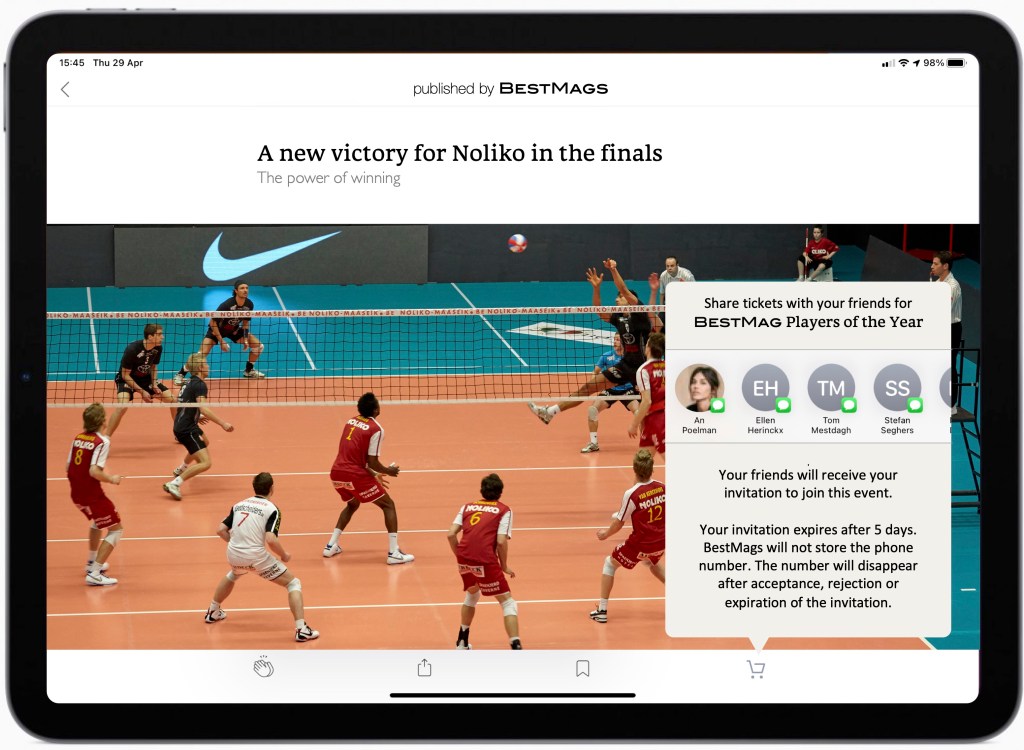
Emily and I wanted to go to the award ceremony with our joint volleyball friends. So we set up a group simply by inviting our friends in the BestMags app. Most of our friends installed the app and got their personal tickets and seat reservation within the app. We were only charged for the invitations that were actually accepted. And when we went to the ceremony, we just needed to show the QR-code in the BestMags app. Again, hassle-free.
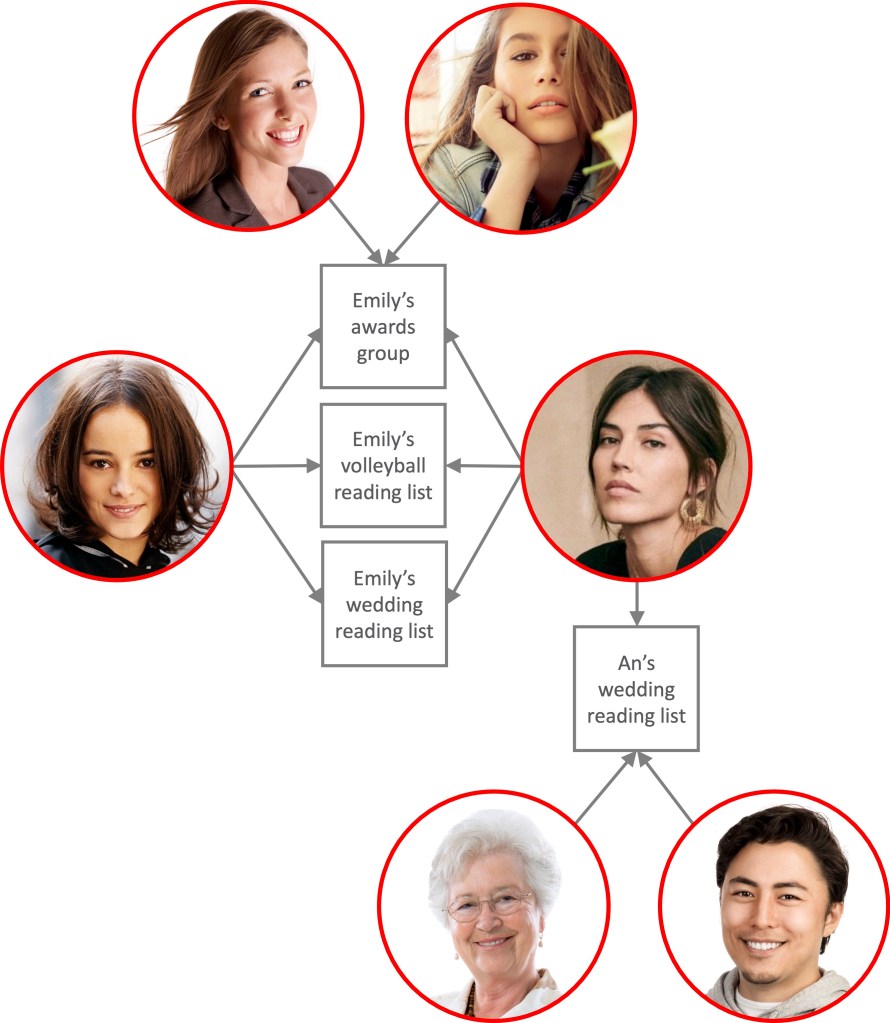
Later on, I started exploring reading lists from others and learned that I was becoming part of a community of people with similar interests. I discovered very interesting reading lists that had become special interest groups, which really became inspiring for me.
By exploring these special interest groups, I discovered that BestMags actually had good articles on hydrogen as energy source. Because of my professional interest in hydrogen for heavy transport, I further explored BestMags’ coverage on the topic. After a while, the app offered me to buy an in-depth analysis that included academic research, thought pieces and lots of updated statistics. The app allowed me to have the invoice sent to my company.
Later on I discovered that our company could take a separate team subscription. I could then invite my team members at a small fee per invited team member. By creating a team edition, my entire team could read the articles of interest without delay and without hassle. Intrigued by the articles of BestMags, many of my team members also took a personal subscription for their leisure time using the same BestMags app they already installed.”
So what?
How did this fictitious publisher BestMags actually transform its business? Next to the traditional fixed-format, full-edition type of subscriptions, they offered digital content in a reader-centric way.
New sources of revenue
Their reader-centric, digital-first transformation allowed them to tap new sources of income:
- new subscriptions for a low budget audience that may initially have limited interest – this avoids revenue leakage caused by ‘account sharing’ within a family
- new subscribers initiated by frictionless invitation and following mechanisms.
- new advertisement revenue from local players and niche products that were not interested in advertising for broad scale editions
- new advertisement revenue thanks to direct access to non-subscribers, using group activities and tickets as grounds for consent
- sales of tickets for events that build on and reinforce the overarching brand
- sales of in-depth reports for professional purposes.
How to get there?
How did this fictitious publisher BestMags achieve this? They repositioned their branding, reinvented the concept of editions, reoriented their article production and made sure they had adequate support from digital technologies. With their reader-centric view, they built user communities using their brand and articles. Communities not only grow the opportunities for direct contact to non-subscribers, they also create network effects. Moreover, they create interesting and privacy-proof advertising opportunities, better than those of targeted advertising based on individual profiling.
Branding
BestMags used to be the name of the holding that published magazines under a number of sub brands, such as WomansMag, LifestyleMag and TrendhopperMag. They now focus BestMags as the top-level brand.
Editions
BestMags used to focus on monthly fixed-format, full editions published under the name of the sub brands. They now enable customers to create their own reading lists which become personal editions with daily/weekly/monthly updates. Other readers can subscribe to personal reading lists, and with enough people subscribing, BestMags elevates such a reading list to ‘special interest group.’ What they achieved in fact is that they are ‘crowd-sourcing’ special interest editions. Those editions can overlap with other editions and go beyond traditional segmentation.
Advertising
BestMags used to collect as much personal characteristics as possible during the registration process: age, gender, domicile, interests, preferences, etc. It then collected past reading habits to further build the profile of readers. These profiles were considered a gold mine for the advertisers because they allow them to target specific audiences with specific ads. Advertisers had learned, though, that really personalised advertising was too complex to manage and that they preferred segmented advertising.
With the introduction of reading lists and special interest editions, BestMags was offering advertisers a cleaner way for segmented advertising. They attracted a completely new market of advertisers such as local players and niche product vendors, e.g. local wedding caterers, local jewellers, party dress rentals and Amish-style decorators.
Journalism
BestMags used to write lengthy articles that fit the fixed-format, full edition format. Even though these articles allowed in-depth reviews and pluralistic views, they were reluctant to have these articles shared on social media. By sharing articles as part of a reading lists through the BestMags app, people encourage each other to read even more. Sharing is no longer given away to social media and no longer need provocative clickbait titles. This increased the credibility of BestMags’ articles as well as increased their reach dramatically thanks to network effects.
App redesign
How did BestMags change their approach to digital reading? They focused on their app and reoriented it. Rather than using a smartphone merely as a ‘window’ onto print articles, they now use the app to generate network effects and to tap new sources of income. Using personal editions, they made the reading experience superior and sticky. By avoiding the registration process all together, they attracted new readers. Rather than a reading app, their new app is an ‘engagement app’ and:
- encourages readers to share with friends within the app, rather than through social media
- encourages readers to follow their passion with special interest editions
- does not need cookies or other privacy-sensitive local storage
- has no registration at all, other than app activation anonymously
- has no password
- has no login, in fact, other than using your phone’s unlock feature
- has no lengthy forms to be completed: it only asks for confirmation and consent
- protects against revenue leakage due to ‘account sharing’, because there simply is no user-id & password
- supports sharing without the need to escape to social media: this prevents that customer intelligence is primarily gathered by the social network
- supports advertising based on current interests, rather than first-party data collection that may become outdated after a while
- obtains anonymous consent from non-subscribers.
How to implement all this?
To transform publishing to digital-first, you may need an overhaul of your content management systems. Also your advertisement auction system may need an upgrade to handle higher volumes and lower budgets. The real benefit is becoming truly reader-centric and encouraging community building. So, how could you implement this and what are necessary components?
Critical digital components
For reader-centricity and community building to be successful, you need to control access to your precious content in a way that encourages readers to join and that discourages free riders. From experience we know that the most flexible and the most scalable method uses the GABAC model.
The GABAC model has proven to achieve top levels of security and privacy that meet the requirements of medical care. Yet, its frictionless nature is loved by consumer oriented applications.
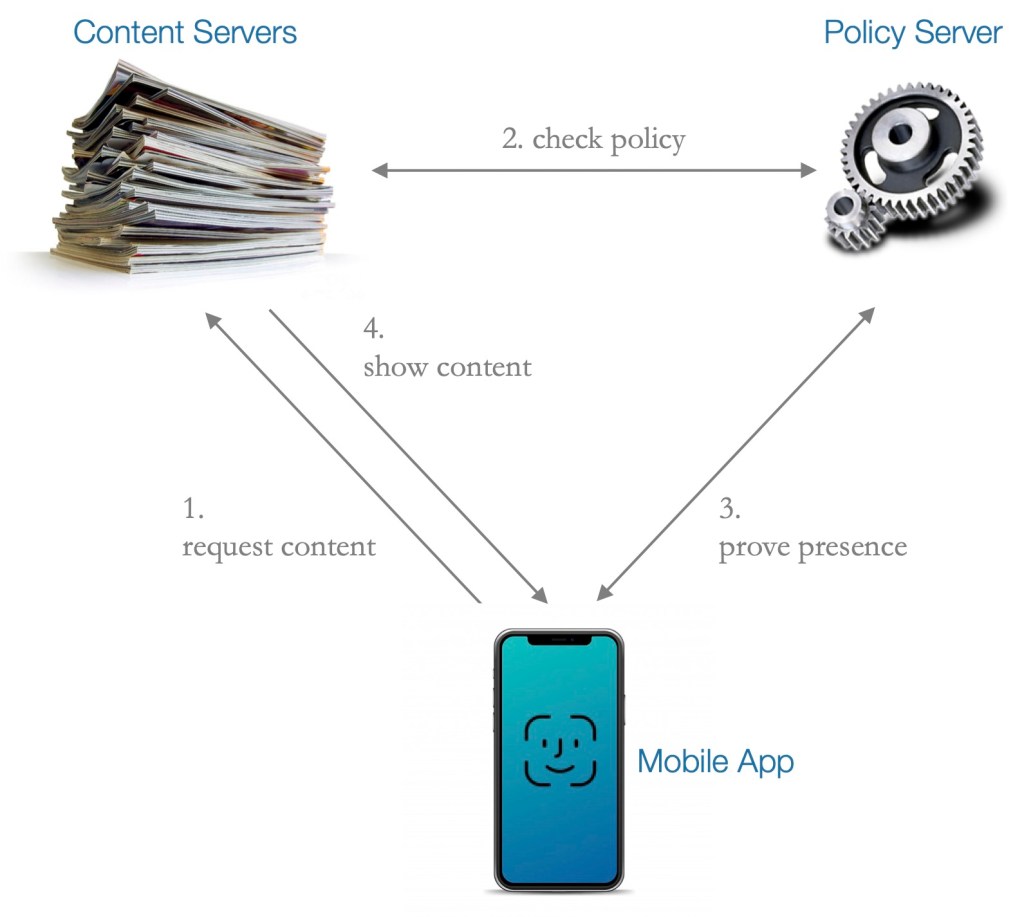
What do you need to implement community building based on GABAC? Following components will be critical:
- You need an anonymous but secure activation system. Making it anonymous reduces friction and privacy concerns. Moreover, by binding authentication to a physical device rather than a user-id, it is much more difficult for trolls and bots to create fake accounts. See our post on How to implement anonymous login? for more details on the pros and cons.
- Do you need a CIAM? The aforementioned procedure does not require a user-id & password. Non-subscribers can remain anonymous even though you can still converse with them directly. Paying customers will be named of course, in line with e-commerce practices and as deterrent against fraud. But you do not need any password handling nor buttons like ‘Login with Facebook’. You may want to keep a legacy CIAM for its precious profile data you already collected, but you can reduce its scope to merely a repository in the back-end. See our post on How to implement policy-based authorisation? that elaborates on the pros and cons of CIAM systems in combination with a Policy Server.
- You need a Policy Server to uniformly apply business rules for all access by readers, both subscribers and non-subscribers. This enables easy management of limited access to free content and even gamification. See our post on How to implement policy enforcement? on how this can work using standardised protocols. And please, do not use method-1 as this can easily be bypassed by consumers.
- You may need to upgrade your consumer management system, though and make sure it can sustain the loads in real-time. Firstly, this system must process single-click payments, subscriptions and step-up options, group tickets, one-off purchases, etc. Secondly and more importantly, it will respond to queries from the Policy Server for it to make policy decisions using payment status, subscription status, number of free articles, etc.
- You need a Policy Server that supports relationships to facilitate sharing by readers through your own platform rather than through the social media. See our post on How to scale the administration of access control? for an in-depth technical analysis of GABAC as authorisation model.
- To really leverage the communities, to give hints to your advertisers and to nurture the network effects even further, you will need a solid data science and machine learning platform. Of course, this only makes sense after a critical mass of readers are using the engagement app.
- So what about newsletters? The aforementioned procedure does not need an email address. The periodically updated reading lists as personal editions together with an app notification are in fact the modern equivalent of newsletters. A newsletter sent by email would not only re-introduce the registration process, it would also defeat the purpose of the app: encouraging engagement and sharing that build the community inside the publisher’s platform (rather than outside at social networks or email systems).
Phasing the implementation in themes
Where should you start and can components be built independently? When to onboard the content servers?
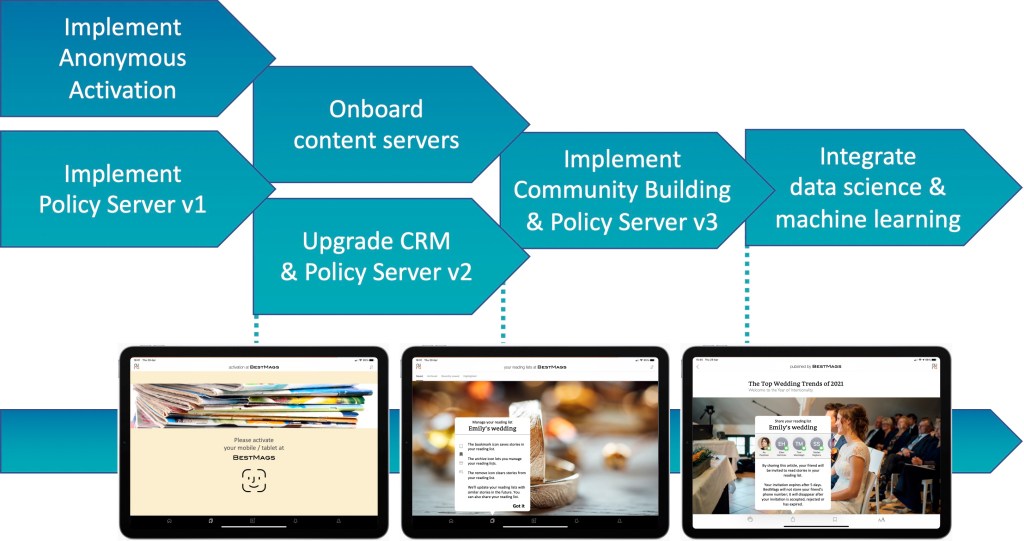
Theme 1: “We want to build a foundation for more intimate engagement with the reader.” You could start to roll out component #1 to launch an initial version of the engagement app, next to your existing apps. Future releases of the engagement app will follow the next phases.
You can also start deploying a Policy Server (component #3) in parallel with the first step and then onboard content servers one by one. This onboarding also involves adapting their app. You may leave a legacy CIAM (component #2) in place to serve existing user-id’s and not-yet-onboarded content servers. Since the GABAC model does not need a CIAM, you may want to plan for its decommissioning though, so as to protect against free-riders, to avoid cookies and to reduce privacy concerns.
Theme 2. “We want to generate reader excitement and bill the customer correspondingly.” Upgrading your CRM (component #4) can be done independently of the previous steps. As soon as its upgrade is complete, you can connect it to the Policy Server. Once you are confident that content servers are successfully onboarded and engaging with the Policy Server, you can start deploying the engagement app for the overarching brand.
Theme 3. “We want to generate network effects amongst readers.” Whereas the previous steps are modernising your content delivery, they are still focused on the reader in isolation. The network effects and the new sources of revenue will mainly arrive with the introduction of community building. The effects of readers encouraging each other to install the app using sharing, following, and doing things in group is what component #5 will bring. Component #6 enables you to crank up these effects and to nourish the community.
The challenges
Even though we have yet to implement the aforementioned model to its fullest extent at a media company, we did implement many parts of it with publishers and broadcasters and we did implement full blown solutions in other consumer sectors. With those implementations we could prove that the proposition creates networks effects and enables new sources of revenue.
Most players in the printed media sector do realise they need some ‘digital innovation’ programme. They often delegate the programme, however, to a small group of young collaborators, working on their own. This trend was initiated by The New York Times, The Washington Post, The Guardian and others who started innovation labs as a separate thing very far from daily operations.
Of course, that has one advantage: Those people can really freely innovate and build things, and they are not slowed down by the big organisation. They don’t have to fight for the things they do. So they are pretty independent. BestMags realised that this approach has a big downside. These labs are very often not aligned with any strategy. They just build things and there are no questions such as: ‘Why do we build those things? How does it eventually play into our core business? How are we eventually going to generate revenue with it? How are they going to be integrated into our organisation? How do we need to change the organisation? So, very often it remains this ‘bubble’ somewhere outside that does things, but no one really knows exactly what it does.
The big challenge is to rapidly re-integrate those ‘bubbles’ and bring the ‘change’ back to the core business. In printed media, if you don’t change the workflows, the culture, the teams and the hierarchies in the newsroom, then all the change that happens stays in the outskirts of the organisation.
Will this be a simple project? No. From experience we know that this takes 3 to 5 years. The proposition we describe may not only disruptive in your market, it will also disrupt your entire organisation. For a successful digital transformation to happen, journalists, editors and marketeers will need to adopt a digital-first and reader-centric culture. Such culture focuses on creating a great digital experience every day and even every hour. Re-inventing the core business is a painful, time-consuming process, and there is always the temptation to look for more glamorous projects, like launching a new soccer app, a TikTok team or whatever. Innovation is great, but at the back of your mind must always be the focus on learning things that will help you re-invent your business.
References
References to academic research can be found in the references list of our post on GABAC.
We describe some other GABAC-based community building implementations here:
- Becoming animal-centric as nutrition vendor for a different example whereby a dog food producer becomes dog-centric and a SaaS player in dog care.
- Becoming employee-centric as HR service provider for a different example whereby a provider of employee-benefits (an insurance company or payroll processor) becomes employee-centric and a SaaS player in employee care.
The technique of creating microservices for core capabilities such as community building, is covered in our posts on:
- How to industrialise API development?
- How to industrialise API operations?
- What is an enterprise capability?
Some technologies supporting the GABAC (Graph & Attribute Based Access Control) model can be found here:
 Controlled AI services